Introduction
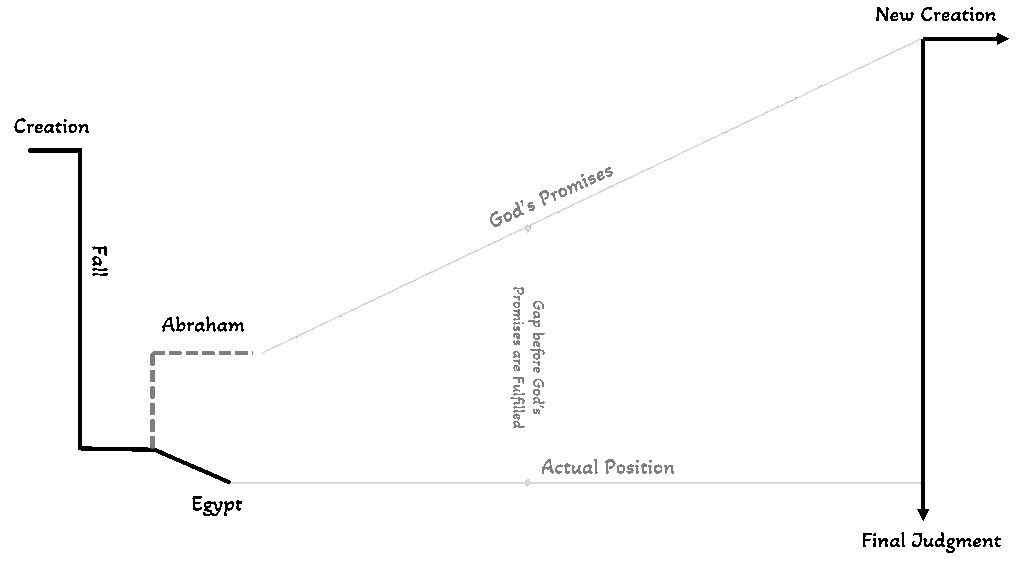
When are God’s promises realized? We have read the hints of a reversal of the Fall in Genesis 3, but these remain unfulfilled at the time of Abram’s being called from his father’s house. How many generations passed with individuals like Abram who could have been called? (Perhaps some were and failed to respond…) Repeatedly, God makes lavish claims about Abram’s future — the father of a great nation — even making a covenant with him, and yet years pass in geriatric childlessness. Can Abram be blamed for finding a surrogate heir through Hagar? Clearly, God could use the assistance…but in God’s good time (though reasons which may be obscure to his lowly creation), he remembers his promises and takes action. It is the role of humans to trust and wait: in other words, to have faith and hope. And so was born Isaac to Abraham and Sarah in their old age.
Lesson
The promise thus passes through Isaac, the only son of Abraham and Sarah. It would be through him that a great nation would arise that would bring about blessings to the whole world. Isaac married Rebecca, and they gave birth to twin sons: Esau and Jacob. Culturally, the older son would receive the birthright which placed them, among other things, at the head of the family, and Esau had narrowly ousted his brother in that respect. More importantly for our story, the birthright encompassed God’s covenantal promises to Abraham and his offspring — though it’s not clear how much this was actually shared: there is no record of Abraham or Isaac sharing God’s promises with their children (though, granted, this sort of interaction seems unlikely to be mentioned). In theory, the promise could have involved both brothers, but as events unfold it will follow the younger. Esau gave up his birthright to Jacob (Genesis 25.34), and then later Jacob (with the assistance of his mother, Rebecca) fooled Isaac into giving him the blessings. Jacob fled to evade Esau’s anger, returning to the land from which Abraham had been called and left his father’s house, Haran. There, he had been instructed to take a wife from his own people (and not foreigners as had his brother, Esau).
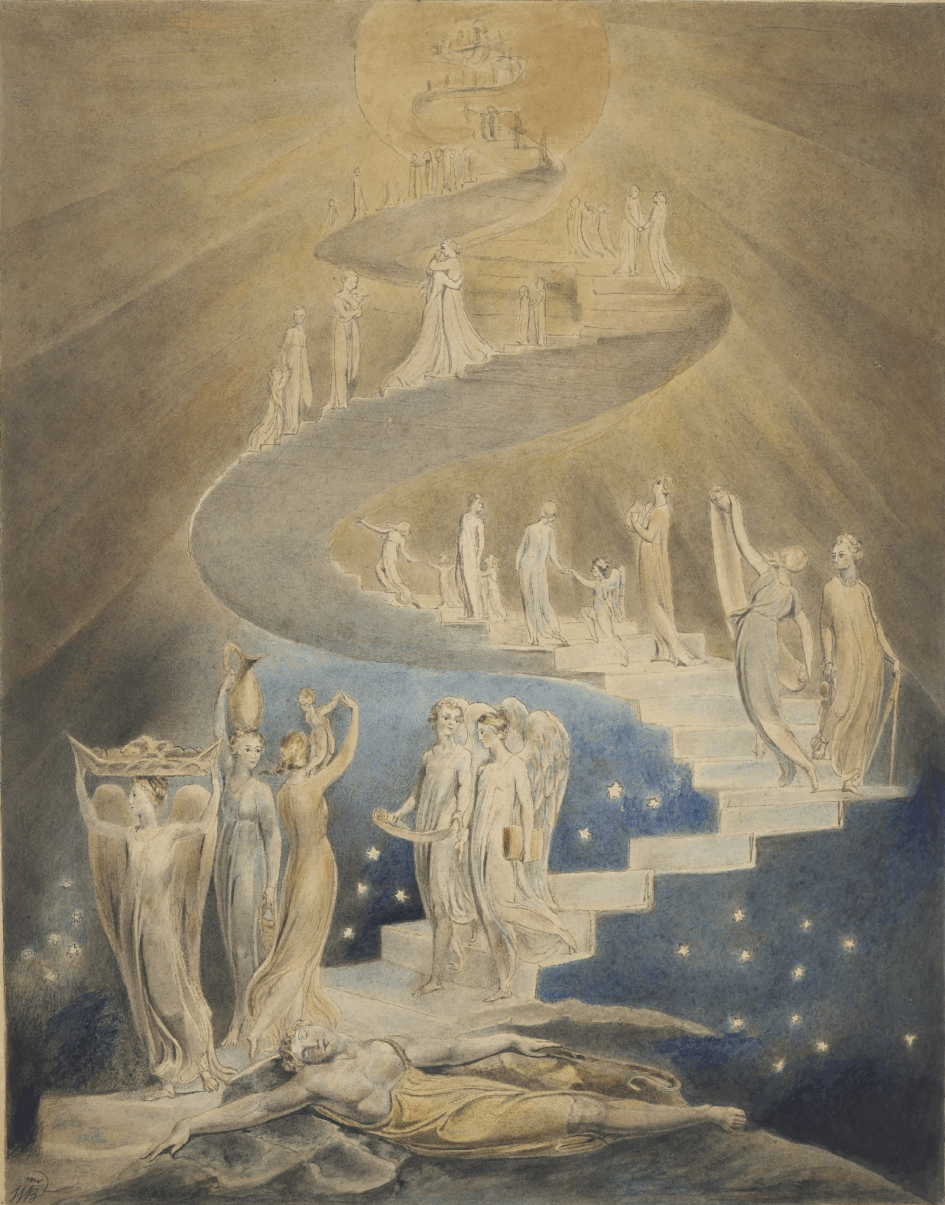
On his journey there, he had a dream — one which would add greater significance to the blessing of his father. Read Genesis 28.10-18, paying particular attention to the message of the dream.
Jacob sees a connection between heaven and earth, a symbol of God’s interest and investment in his Creation. And from ‘heaven’, God speaks to him: not only will he inherit the family according to the blessings given by Isaac, but he will inherit the covenant given to Abraham. The promises are the same: land, children, his offspring will be a blessing to the whole world, and God would not leave him.
Completing his journey to Haran, Jacob marries the daughters of his uncle Laban, Rachel and Leah, and after around fourteen years returns home with all of the great wealth he had acquired. With Rachel and Leah he has twelve sons. Due to famine, they end up in Egypt where one of the sons, Joseph, has been appointed to a high place in the government.
Jacob (who is also called ‘Israel’, meaning ‘struggling or prevailing with God’ after a wrestling match) was reticent to join his children in Egypt as God had promised him an inheritance in Canaan, not in Egypt. Further, gods were often perceived as local deities, ruling over particular portions of the earth — could the God of Abraham and Isaac, his fathers, depart from this land? Would the famine cause this divine relationship to be destroyed? Read Genesis 46.1-4. What does God promise? God will go with him into Egypt and fulfill his promises there, as this god transcends geographical limitations. Jacob/Israel thus settles in Egypt, awaiting the fulfillment of the promise to return to the land.
Here ends the book of Genesis, but the story continues into Exodus. Let us peek at the first chapter to see where things lie with Israel and his children in Egypt, and the state of the promises. Read Exodus 1.1-14.
This passage divides into two parts. The first seven verses show a partial fulfillment of the Abrahamic covenant — the children and grandchildren of Jacob/Israel (now called the ‘people of Israel’ or the ‘Israelites’) have multiplied and become a great nation. Yet the king (pharaoh) of Egypt sees this as a threat and enslaves them. If you read the rest of the first chapter, the king even endeavors to prevent them from having more children, but this effort failed.
Reflection
In Egypt, Israel and his children expected to remain only briefly before they might return and inherit the land God had promised them. Instead, four hundred years later, they remain in Egypt. They have become a nation, but one enslaved to the power of Egypt with little hope of the future God had promised them. When would God’s promises finally be realized? How many parents told their children the stories of their forefathers and the promises God had made to them before getting up and heading to work as slaves in a country not their own. This was a new low point for God’s people — in a fallen world working as slaves. After 400 years, however, God remembered his people. When the Old Testament speaks of God remembering, it means that he is now prepared to take decisive action: in this case, to act to save the people of Israel and start the process of completing his promises.
God’s promises are not necessarily fulfilled in a timeline his creatures would like. Rather, they receive progressive and incremental fulfillment, often through suffering and agonizing delay.